
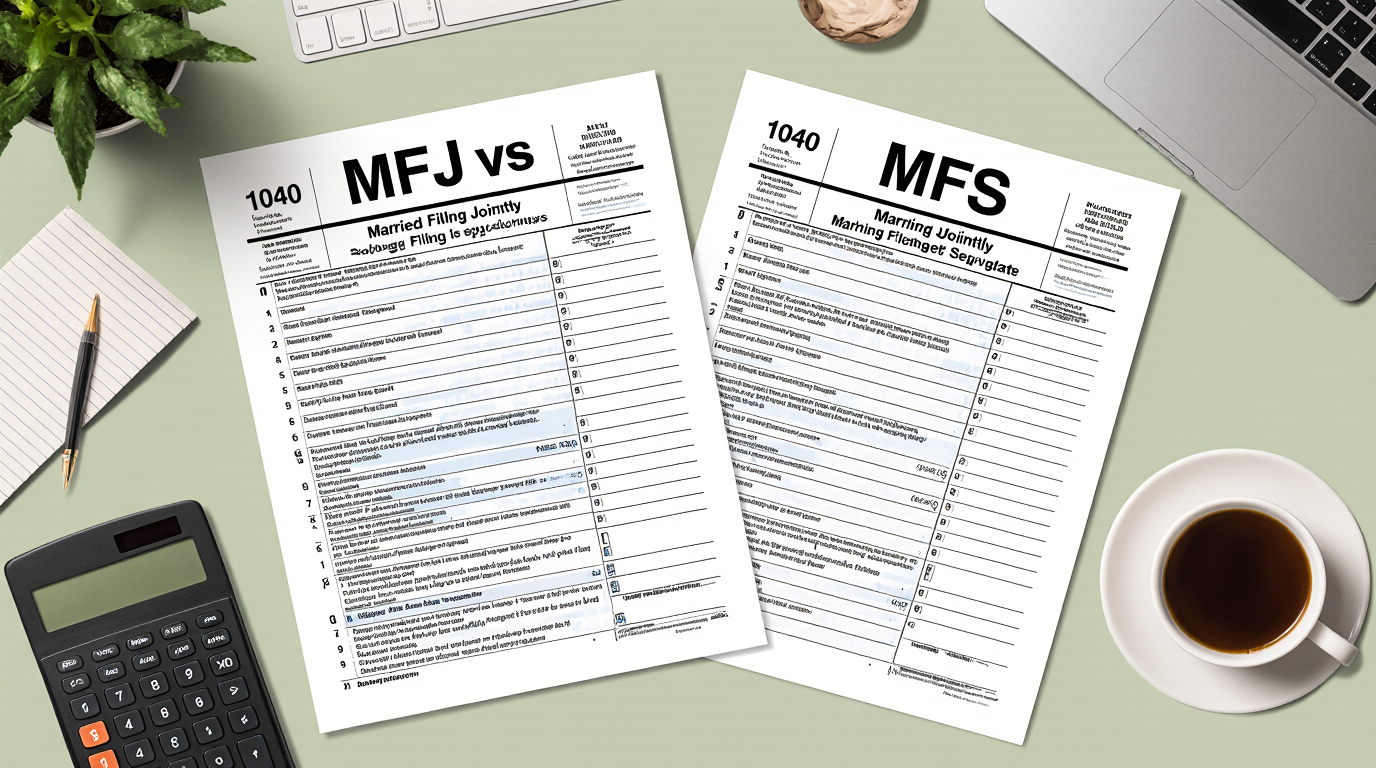
Choosing the right filing status—Married Filing Jointly vs Separately (MFJ vs MFS)—can make a big difference in your U.S. tax refund and overall liability. Whether you’re living in Germany, another European country, or stationed overseas with the U.S. military, understanding these two options is essential for your 2025 tax return (filing in 2026).
What’s the Difference Between MFJ and MFS?
Married Filing Jointly (MFJ) means you and your spouse file one combined tax return. You report both incomes, deductions, and credits together.
Married Filing Separately (MFS) means each spouse files their own return, reporting only their individual income, deductions, and credits.
Why Most Couples Choose MFJ
-
✅ Higher standard deduction – In 2025, the standard deduction for MFJ is expected to be around $29,200, double the MFS amount.
-
✅ Eligibility for more credits – Filing jointly lets you claim credits like the Earned Income Tax Credit (EITC), Child Tax Credit (CTC), and education credits, which are unavailable or limited under MFS.
-
✅ Simpler IRS process – The IRS typically prefers joint returns, reducing processing time and simplifying communication.
When MFS Might Be Better
There are situations when filing separately can make sense, such as:
-
🧾 One spouse has significant medical expenses or student loan payments.
-
💳 You want to keep your financial liability separate (if one spouse owes back taxes or child support).
-
🌍 Your spouse is not a U.S. citizen (common for expats in Germany). Sometimes it’s better to file separately rather than electing to treat your spouse as a resident.
MFJ vs MFS for U.S. Expats and Military Members
-
🇩🇪 Living abroad with a non-U.S. spouse: You can choose whether to include your foreign spouse’s income (MFJ) or exclude it (MFS). Filing jointly may increase credits but can also trigger foreign income reporting requirements.
-
🎖 Military stationed overseas: If your spouse is back in the U.S., MFJ can still apply. You can sign your spouse’s return using Form 2848 (Power of Attorney).
-
💰 Foreign Earned Income Exclusion (FEIE): This exclusion works for both MFJ and MFS, but joint filers often benefit more if both spouses qualify for the exclusion.
How to Decide
If you’re unsure, you can simulate both filing statuses to compare results. At USA Tax, I help clients determine which option gives them:
-
The maximum refund,
-
The lowest tax liability, and
-
The fewest complications for expats and military families abroad.
Final Tip
In most cases, Married Filing Jointly provides more benefits. But if your spouse is foreign, has high income, or you want to protect your own refund, MFS may be smarter.
👉 Book your free 15-minute call with USA Tax today and let’s find the best option for your situation.
Leave a Reply